



What Is Cryptography?
Cryptography is the science of protecting information by transforming it into a form that cannot be understood by unauthorized individuals. It encompasses techniques that ensure confidentiality, authentication, integrity, and non‑repudiation. While encryption is one of its most important tools, cryptography as a whole is a much broader discipline that has evolved over thousands of years, shaping the way humans protect secrets, communicate securely, and safeguard their most valuable information.
 History of Cryptography
The origins of cryptography date back to ancient civilizations. Early methods were simple and manual, such as the Caesar cipher, which shifted letters in the alphabet to conceal messages. The Spartans used the Scytale, a strip of parchment wrapped around a rod so that the message could only be read with a rod of identical diameter. These early techniques already demonstrated the fundamental idea of transforming information so that only those who possess the key can understand it.
During the Middle Ages, more sophisticated substitution and transposition ciphers appeared. In the 16th century, Blaise de Vigenère introduced the Vigenère cipher, which used a repeating keyword to vary the substitution, making frequency analysis far more difficult. This cipher was considered unbreakable for centuries.
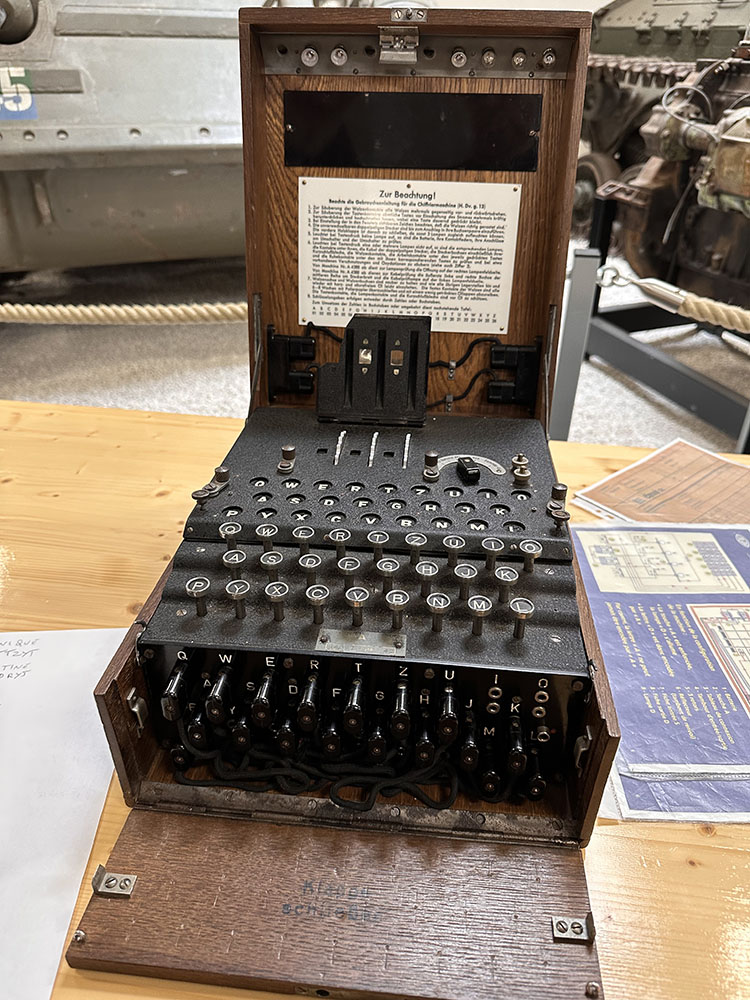
The 20th century marked a turning point with the rise of mechanical and electromechanical cryptographic machines. The most famous is the Enigma machine, used by Nazi Germany during World War II. Its rotating rotors and electrical circuits produced extremely complex substitutions. The Allied effort to break Enigma—led by Alan Turing and other pioneers—was a milestone in both cryptography and the birth of modern computing.
Cryptography as a Strategic Weapon
Because cryptography protects information from interception or analysis, it has long been considered a strategic technology. For decades, many countries classified strong cryptographic tools as military weapons. Exporting cryptographic software was restricted in the same way as exporting advanced missiles or radar systems.
Even today, debates continue around the balance between privacy and national security. Some governments advocate for “exceptional access” or backdoors, while security experts warn that weakening cryptography for one actor weakens it for everyone. Cryptography remains both a shield for citizens and a point of tension for states.
Understanding Cryptography: Keys, Algorithms, and Hashes
 Cryptography relies on mathematical algorithms and keys. A key is a secret value that controls how information is transformed.
Without the key, the transformation should be impossible to reverse.
Modern cryptography includes symmetric algorithms (same key for encryption and decryption) and
asymmetric algorithms (public and private keys), which enable digital signatures, secure key exchange, and the foundations of secure communication.
Cryptography relies on mathematical algorithms and keys. A key is a secret value that controls how information is transformed.
Without the key, the transformation should be impossible to reverse.
Modern cryptography includes symmetric algorithms (same key for encryption and decryption) and
asymmetric algorithms (public and private keys), which enable digital signatures, secure key exchange, and the foundations of secure communication.
To illustrate a basic concept, consider hashing. Hashing is not encryption, but it is essential to cryptography. Choose a word—for example CAT. Assign each letter a number (A=1, B=2, … Z=26). C(3) + A(1) + T(20) = 24. This simple “hash” always produces the same result for the same word, but cannot be reversed to recover the original message. Modern hash functions such as SHA‑256 or SHA‑3 produce long, unique fingerprints for data, ensuring integrity and tamper detection.
Encryption: Protecting Data Against Theft or Loss
In our digital world, personal data is stored in countless files that we do not want to reveal to just anyone. The theft, loss, or even lending of a computer, smartphone, or tablet can represent a serious violation of privacy. Protecting data has therefore become a major issue. Even a reinforced safe has never guaranteed absolute protection—skilled safecrackers can open one in minutes. And what happens if we lose the key or the code?
Fortunately, modern encryption provides a powerful solution. Today, a “safecracker” would instead have to solve extremely complex mathematical problems, considered practically impossible to break with current computing power. This helps explain why the military considers encryption part of its arsenal, just like an aircraft carrier.
Today, encryption is everywhere: online banking, messaging applications, cloud storage, and secure websites. It ensures that even if data is intercepted or stolen, it cannot be read without the correct decryption key. As digital technology continues to grow, encryption has become one of the most important tools for protecting privacy and maintaining security in our connected world.
How Cryptography Is Used Today
 Cryptography is omnipresent in modern digital infrastructure. It protects communications, identities, transactions, and stored data.
Without it, the internet as we know it could not function.
Cryptography is omnipresent in modern digital infrastructure. It protects communications, identities, transactions, and stored data.
Without it, the internet as we know it could not function.
- Secure communication: HTTPS, TLS, VPNs, and messaging apps prevent eavesdropping.
- Authentication: Password hashing, digital certificates, and multi‑factor authentication rely on cryptographic proofs.
- Data protection: Files, disks, and cloud backups are encrypted to prevent unauthorized access.
- Digital signatures: Used to verify the authenticity of documents, software updates, and transactions.
- Blockchain and cryptocurrencies: Hashes and signatures ensure integrity without a central authority.
- Distributed systems: Peer‑to‑peer networks use cryptography to secure data stored across untrusted nodes.
From ancient secret writing to the mathematical foundations of modern cybersecurity, cryptography has become an essential pillar of trust in the digital age. It protects our privacy, secures our communications, and ensures the integrity of the systems we rely on every day.